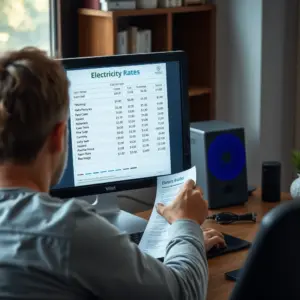
Texas has the most consumer-friendly electricity market in the United States. Unlike most states where you’re stuck with one utility whether you like the price or not, Texas gives you real choice. Over 100 retail electricity providers (REPs) compete for your business in deregulated areas—which cover about 85% of the state, including Houston, Dallas, Fort Worth, Austin, Corpus Christi, and most suburbs. Switching providers is faster than changing your Netflix plan and can save the average household $200–$600 a year. Here’s exactly how simple it is.
Step 1: Check if You’re in a Deregulated Area
Go to Sparkyenergy.com and simply enter your zip code. If you see dozens of plans, congratulations—you’re free to shop. If you live in a small municipal utility territory (like Austin Energy in parts of Austin, CPS in San Antonio, or some rural co-ops), you may have limited or no options. Everyone else can switch.
Step 2: Compare Plans in Under 5 Minutes
You don’t need spreadsheets. Sites like Sparkyenergy.com let you:
- Enter your zip code
- Type in your average monthly kWh usage (it’s on every bill)
- Instantly see every available plan sorted by price
You’ll see fixed-rate, variable-rate, 100% renewable, bill-credit, free-nights, prepaid, and time-of-use plans. Most people pick a straightforward 12- or 24-month fixed-rate plan to lock in a low rate and avoid surprises.Typical rates right now (November 2025) range from about 10.8¢ to 14.5¢ per kWh for 1000 kWh usage on good 12–36 month fixed plans—often half what people were paying during the 2021 freeze panic.
Step 3: Sign Up Online in 3–7 Minutes
Pick the plan you like and click “Enroll” or “Sign Up.” You’ll need:
- Your name as it appears on the bill
- Service address
- Phone number and email
- Usually the ESI-ID (a 17- or 22-digit number on your current bill—most sites can look it up with your address)
- Payment info or bank details for ACH (prepaid plans just need a starting balance of $20–$75)
No site visit. No credit check for many post-paid plans (or a small deposit if your credit is low—often waived with a letter of guarantee from your old provider). You click “submit” and you’re done.
Step 4: The Switch Happens Automatically
Your new provider notifies your old one and coordinates with Oncor, CenterPoint, AEP, TNMP, or whoever your transmission and distribution utility (TDU) is. The actual switch occurs on your next meter-read date—usually within 3–14 days. You do nothing. Your power never blinks. The wires and poles stay exactly the same; only the company billing you changes.You’ll get a “Welcome” email or letter from the new provider and a final bill from the old one. That’s it.
No Cancellation Fees? Read the Fine Print (But Most People Don’t Pay Them)
If you’re on a month-to-month plan, you can leave anytime with zero fee. If you’re in a term contract, there’s usually an early termination fee (ETF)—typically $150–$295, sometimes as low as $59 or even $20 per month remaining. Many savvy shoppers time their switch for the last month of their contract (your provider is required to send 30- and 14-day renewal notices) and walk away fee-free.
Real-Life Example
A family in Katy (west Houston) was paying 18.2¢/kWh on an expired variable plan with TXU. In October 2025 they went to Power to Choose, found Gexa offering 11.4¢ all-in for 24 months with 100% renewable energy, signed up online in six minutes, and switched November 14. Their December bill dropped from $318 to $178 for the same usage. Total effort: less time than waiting in the Buc-ee’s line.
Common Myths Debunked
“My power will go out during the switch.” → Never happens.“I’ll get double-billed.” → No, the old provider issues a final bill; the new one starts fresh.“It hurts my credit.” → Switching itself has zero effect on credit.“I have to call someone.” → 99% of switches are 100% online.
Final Tips to Make It Even Easier
- Shop 30–45 days before your current contract ends to avoid auto-renewal at a higher rate.
- Use your exact usage from the “Electricity Facts Label” (EFL) section of past bills for accurate comparisons.
- Sort by “Average Price at 1000 kWh” to ignore gimmicky bill credits that disappear at real-world usage.
- Set a calendar reminder 60 days before your new contract ends—repeat the process and keep the savings coming.
In Texas, switching electricity providers is literally one of the easiest ways to put a few hundred dollars back in your pocket every year with almost zero effort. The system was designed that way on purpose. Take five minutes this week, run your zip code, and see how much you can save. Your wallet—and future you—will thank you.